A CULTURE OF DEFIANCE: History of the Reform-Conservative Party of Canada
After Don Andrews arrest, Wolfgang Droege and Alex McQuirter decided to focus their attention on promoting the KKK in Canada. With the assistance of David Duke, then Klan leader in the U.S., they attempted to bring the group into the mainstream. To appeal to a broader cross-section, Duke had for the first time in Klan history, allowed women and Catholics to become members, and this practice was also followed in Canada.
With
Paul Hartmann leading the Toronto group, Droege and McQuirter headed West. According to Droege:
"We decided it would be a good time to go out west. McQuirter's father was in the car business, you see, and he was going to give us dealer's licences to sell cars. So we went out to Vancouver and got into the car business." The two Klansmen rented an apartment in North Vancouver and started to visit some of the men and women named on David Duke's Canadian mailing list. Whereas the used car trade did not appeal to Droege and McQuirter, white supremacist agitation clearly did. "We were selling cars here and there, but we didn't really do too well at it," says Droege. "So McQuirter and myself started visiting some of these people. That's how we got started. We eventually had meetings. For the first time ever in the post–World War Two era. there was a racialist organization in western Canada. We did much better out there [than in Toronto]. Here in Toronto is the toughest recruiting ground there is in Canada." (1)
When Don Andrews had served his jail time he threw his efforts into the Nationalist Party of Canada, and for a time Droege and McQuirter helped out. McQuirter returned to Toronto to serve on the Party's executive council, while Droege remained in British Columbia, working at a printing plant called Capital Business Forms.
But the two men soon grew weary of the NPC and resumed their Klan activities.
In April of 1979, Droege organized a publicity-grabbing B.C. tour by David Duke, during which he conducted more than 30 newspaper, television and radio interviews. "[The tour] was quite successful. We got massive publicity," Droege recalls now. "A Conservative member of Parliament told Duke I should be his advance man, his promoter." Interest in the B.C. branch of the Klan boomed as a result ... By October 1980, Droege says he had been forced out of his printing job. "The provincial government was putting pressure on the owner, and he was getting problems getting government work because of my organizing on behalf of the Klan." (1)
So Droege left the firm and devoted himself to working full time on Ku Klux Klan recruitment; often flying back to Toronto to confer with McQuirter. Then they caught a break. After listing their telephone number in the Metro Toronto phone book, the mainstream media picked up the story, and they
became media darlings.
The phone line was installed at McQuirter's east end rowhouse. McQuirter later told Julian Sher, author of White Hoods, a look at Canada's KKK: "It was nothing planned, really. We had the phone installed so we could print up some literature. The news media really blew it up and did all our work for us."
In one fawning profile in The Ottawa Citizen in July 1980, a staff reporter, evidently expecting the Klan leader to burn a cross or shoot a non-white in her presence, describes McQuirter as "shy" and "better suited to a milk commercial." The Citizen writer declares, "Alexander McQuirter doesn't look like a racist." A December 1980 Canadian Press story that ran in a number of newspapers across the country struck a similarly artless tone, describing McQuirter as the "youthful, unlikely-looking leader of the Canadian Knights of the Ku Klux Klan," a leader who "speaks with the lofty ideals of a boy scout counsellor." (1)
As a result they attracted hundreds of inquiries from potential members.
Stanley Barrett, in his seminal work on the Canadian far right, Is God a Racist?, estimates that there were approximately 2,500 committed Klan members and activists at this time. Many of these new members were, by Ku Klux Klan standards, very young. Droege oversaw a massive recruitment campaign in urban B.C. schools. A number of Vancouver high schools as well as the University of British Columbia and the B.C. Institute of Technology were targeted. Those who responded received information packages mailed from Louisiana and application forms for the Klan Youth Corps. In Ontario, meanwhile, McQuirter was leading an effort to distribute Klan propaganda in Durham-area high schools. On cards handed out to children at junior high schools in and around Toronto, the slogan "RACIAL PURITY IS CANADA'S SECURITY" was prominently featured. Says Droege: "We seemed to have a good rapport with young people.(1)
 Ian Verner Macdonald
But they also grabbed the attention of other less likely Canadians.
Though members of white supremacist organizations tend to be marginal individuals who achieve little, if anything, in some cities, the Klan's supporters were hardly stereotypical. According to McQuirter, the Knights of the Ku Klux Klan attracted members of the news media, Armed Forces and various police agencies. (1)
And even higher up the food chain, they won the support of a senior member of the Canadian diplomatic corps, Ian Verner MacDonald.
Macdonald, a wealthy land-owner in Ottawa with a penchant for writing letters to the editor, admits he acted as an "adviser" to McQuirter. Says Macdonald: "When Alex would visit Ottawa, generally if I had a spare room, I would let him use it. We would talk about social problems and develop ploys to publicize his point of view. We weren't plotting any revolutions or insurrections .... In some ways, some of the Klan's comments ring very true. Any sensible Canadian who has the interests of the country at heart would want the borders controlled, for example. The potential for the white population to be completely overwhelmed is too real and too great to be ignored."
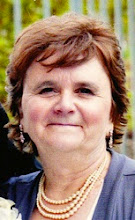
Ann Farmer
While in Vancouver, Wolfgang Droege recruited a bright young UBC student named Ann Farmer (not her real name) (2). She would become the Klan's provincial spokesperson and later Droege's live-in girlfriend.
The above picture shows Farmer with James R. Venable, a Georgia lawyer and white supremacist who organized a major Ku Klux Klan faction in 1963 and headed it for nearly 25 years; and Don Black* who would take over the leadership of the KKK in the U.S. after David Duke left to form the National Association for the Advancement of White People, to counter the National Association for the Advancement of Black People.
The third, smallest category of Klan members consisted of those who came to the KKK not as frustrated losers or longtime Nazis, but as middle class Canadians intellectually attracted to the Klan's racism. McQuirter fit into this category. So did Ann Farmer, a student at the University of B.C. who became a provincial KKK leader. Proud of her Christian upbringing, she said she was "concerned about the increasing number of non-whites in Canadian society" and decided to join the Klan "because I am impressed by the Klan's spectacular history of fighting for white rights." These young, articulate leaders provided the public image for the Klan, the sanitized facade behind which the confused "losers" and the committed Nazis could hide. (3)
But then key members of the Klan, including Droege and McQuirter became involved in a failed plot to launch a coup in Dominica and take over the island for profitable gambling and drug operations. This landed Droege in jail and Farmer was given a higher profile in B.C. McQuirter joined her and together they kept the PR going.
"Cross-burning B.C. Klan holds rally behind armed guards," read the headline in the Vancouver Sun when the first public cross lighting in the province took place in late May. Forty Klansmen burned an eight-metre cross at Stave Lake near Mission. At least two of the KKK members carried rifles and shots were fired into the air. "Let us offer a prayer of thanks to God for creating us in his image, for giving us white skin and superior intellect," said KKK leader Ann Farmer as she opened the ceremony with a prayer. The Klan crowd gave Nazi-style salutes and chanted "white power!"' Three months later, the same scene was repeated at the side of the Fraser River in Surrey, as 45 Klansmen — several of them carrying weapons — held a cross burning. The proceedings were seen on television, thanks to a BCTV film crew which had been invited to the event. (4)
The B.C. Legislature discussed this growing problem, describing a newspaper account of the Slave Lake rally.
"Let us offer a prayer of thanks to God for creating us in his image, for giving us white skin and superior intelligent." That's how the invocation begins at the famous Stave Lake cross-burning. "With that invocation, delivered by a blonde woman in her early twenties, the Ku Klux Klan's first public cross-burning in B.C. in years was underway Sunday. Before long, 40 white supremacists, a dozen of them wearing white robes, were brandishing flaming torches, making Nazi-style salutes and chanting 'White Power, ' as an eight-metre-high, rough-hewn wooden cross sent flames into the darkening sky."
"The woman speaking identified herself as Anne Farmer. She said she was the National Grand Chaplain of the Canadian Klan and the girlfriend of Wolfgang Droege, the ex-B.C. Klan leader, now in a New Orleans jail .... "Canadian Klan leader Alexander McQuirter, who attended the ceremony, was asked about the Klan's claim to have attracted a 'new breed' of recruit - businessmen instead of workers. He said 'the (people who wear) ties type' are the new Klan majority, but they want to protect their jobs, so they just provide money and other backroom assistance . . . . .. (5)
They were definitely getting money from somewhere. McQuirter himself would later be arrested for his part in the failed coup, and Ann Farmer would be made leader. This didn't sit right with many who felt that a woman should not lead, and the organization began to fracture.
Ann Farmer insisted her group was "very much larger" than her miniscule" rivals. Certainly Farmer's group was in the best position to assert itself as the dominant force on the extreme right in Canada. (6)
Though only 26, Ann had all the connections. When she was handling communications, she kept up a steady correspondence which American Klan leader David Duke, and would do the same when Don Black took over.
Farmer's Klan also benefited from having been given the official franchise for Canada by a revitalized and united American Klan. Six independent Klan organizations in the U.S. had banded together to form a Confederation of the Klans in Stone Mountain, Georgia, in September, 1982. Don Black, the leader of the Knights of the Ku Klux Klan, with which the Canadian Klan had been affiliated, was elected to a four-year term as Grand Wizard of the confederation. Black was still out on appeal of his three-year sentence for his role in the Dominica plot.
James Venable, a 76-year-old leader of another Klan group who traced his family heritage back to founding members of the post-Civil War Klan, was given the honorary title of Imperial Emperor. David Duke, who had handed his Klan organization over to Don Black in order to set up his National Association for the Advancement of White People, addressed the Stone Mountain rally, and it was expected that the NAAWP might affiliate with the confederation. Black called the confederation "the biggest step toward Klan unity in 50 years." The American media estimated that 6,000 people belonged to the new body.
Ann Farmer represented the Canadian Klan at the Georgia rally. Getting the stamp of approval from a large American Klan organization gave Farmer the same organizational, political and financial backing that McQuirter had received from Duke's Klan when the former was trying to establish his Canadian Klan four years earlier. In addition to her Stone Mountain visit, Farmer had spent several weeks in the U.S. as part of a "Leadership Training Program" with Don Black. She toured various Klan regional headquarters and took part in local Klan events across the U.S., visiting New Orleans, Seattle, Denver, Dallas, Birmingham, Milwaukee, Chicago, New York, Washington, Arlington and Philadelphia. She also visited the headquarters of Duke's NAAWP. "During my stay in the United States, I learnt how to organize the Klan on a larger scale than presently exists in Canada," said Farmer. "I gained from the knowledge of Klan leaders who have many years of experience in Klan administration."
Farmer wasted little time in applying her training. Plans were made to resume publication of The Spokesman. Its operations were moved to New Westminster, and a promotional letter which carefully described the newspaper as "not primarily a Klan publication," urged KKK supporters "to subscribe to the fastest growing White Nationalist newspaper in the country."
Farmer's Klan also began to put out a newsletter, Canadian KKK Action, similar to the bulletin McQuirter had produced in 1981. Aside from ads for Klan paraphernalia, a glowing tribute to the imprisoned McQuirter and news of Klan activities, the newsletter presented a new, twenty-point program of the Canadian Knights. This was the first time the Klan had officially formulated a program.
Many of the points were the standard calls of the KKK: a return to the traditional white values on which Canadian society was built;" "a selective immigration policy, which includes the end of non-white immigration;" and the "repatriation" of non-whites "to their country of ethnic origin." The Klan also appealed to a larger conservative constituency by espousing such goals as the restriction of abortion and the expansion of the armed forces. The KKK even threw in some left-sounding positions, pledging "to end the exploitation of Canadian resources by multinationals corporations" and to provide "political and economic autonomy to the native Indian and Inuit nations."
Farmer claimed the Klan was growing steadily while maintaining a low profile. "Our activities include meetings, the education of members, the dissemination of our ideology to non-members, weapons training and a youth corps," she said. "I am very optimistic about the Klan's future in Canada. I have observed a positive correlation between growth in Klan popularity with an increase in non-white population. Today in B.C., people are becoming more overtly racist because there is a local influx of non-white immigration." (6)
And yet with all this publicity, Preston Manning claimed not to know of Wolfgang Droege's participation in the Klan. He would have been the only person in the country. And according to Dr. Debra Chin, it was Stephen Harper himself who arranged to have Droege's Heritage Front handle security when Manning was speaking in Ontario.
Stephen Harper was Reform Party Policy chief, at a time when it had numerous members of the white supremacist group Heritage Front as members. Trevor Harrison, further documents that Mr. Harper even had Heritage Front members doing security for Preston Manning at Reform Party events in Ontario. (7)
I guess it's possible.
Footnotes: *Don Black also now runs the controversial Stormfront website.
Sources:
1. Web of Hate: Inside Canada's Far Right Network, By Warren Kinsella, Harper Collins, 1994, Pg. 214-217
2. Culture meets power, By Stanley R. Barrett, Praeger, 2002, ISBN: 13: 978-0275978075, Pg. 93
3. White Hoods, By Julian Sher, New Star Books, 1983, ISBN 0-919573-13-4, Pg. 117
4. Sher, 1993, Pg. 141
5. Official Report of DEBATES OF THE LEGISLATIVE ASSEMBLY, (Hansard), JUNE 23, 1981
6. Sher, 1993, Pg. 184-185
7. Canada's Prime Minister Stephen Harper demonstrates continued ultra right wing affiliations by blocking pro social justice Toronto candidate, by Dr. Debra Chin, The Canadian