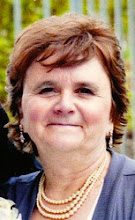
Showing posts with label Diane Dowling. Show all posts

Thursday, October 14, 2010

It's Not Just About the Money But the Acknowledgement


"A journey of a thousand miles begins with a single step." Lao-tzu. Chinese philosopher (604 BC - 531 BC)
My husband and I are raising a grandchild. It's both wonderful and terrifying. But it's also expensive. Freedom 55 becomes Freedom 75.

We're holding onto our house longer than we'd planned, we've cashed in RRSPs and my husband is still working though he turned 65 last year.

But you do it because you can't imagine your grandchild going into foster care. And that's where many of these children from what are referred to as "skipped generation" families, would end up.

I belong to an advocacy group who have been lobbying the government for years, to create a system that is fair and designed to keep children with their families.

It's difficult because once you mention money in relation to a grandchild (niece, nephew, sibling), you're thought of as callous. You want to be paid for something that should be a responsibility. "Feeding off the public trough."

In Ontario the $ 241.00 per month provided comes from social services and you have to jump through hoops to get it. Many of the children are disabled, as is my grandson, and many of the grandparents raising them have medical problems, as do I. But you're terrified that if you raise these issues with the authorities they will take your grandchildren away. And it happens. Believe me.

There was one man in our group who learned that his three grandchildren had just been placed into foster care in a city about 200 km. from here. He was living in a one bedroom apartment and is on worker's comp from a back injury. He contacted our local Children's Aid and was told that he may be eligible to receive a foster care allowance. They gave him $ 100.00 to pay for the gas to go and pick up the three children. That's the last money he ever received.

Once the children arrived he was told that he didn't qualify to become a foster parent because of his back and his apartment was two small. He couldn't yet get the child tax credit because their residence hadn't been established and he didn't have the funds for first and last month rent so that he could get a bigger place. He tried keeping the children in his small apartment, but obviously it didn't meet the criteria of suitable accommodation. The children were eventually taken away.

The government would rather spend thousands of dollars a month to put the children in foster care, than offer help to a family member, where the children feel secure.

There is another woman whose mentally ill daughter lost custody of her five children, when she was institutionalized. This woman applied for custody but was told that because of her age and the size of her small country home she could only have two of them. How does a grandmother make that choice? How do you explain that to the three you will have to give up?

These stories are not unique unfortunately.

And for those "no tax", "no hand outs" groupies, weigh the cost of putting children into foster care against providing a bit of help to keep them with family members. It's staggering.

Yet the most common complaint among us, is the lack of respect or understanding of the situation. None of us are looking for medals or pats on the back. We just want the government to take this and us seriously.

The stories above are from those whose grandchildren were already in the system. Most of us are fortunate enough to have been able to step in before that happened. But the threat is with you everyday.

Carol Goar wrote an excellent piece on Michael Ignatieff's new "family care plan", which would offer help to those taking care of aging relatives. Stephen Harper called it "reckless" and Diane Finley suggested that they simply use their vacation time.

This is the same Diane Finley who earns $ 200,000.00 a year as a cabinet minister plus perks, drives around in a limo with a driver paid for by us, and whose husband is a patronage appointed senator. Both living very well off the "public trough". What would she know about hardship?

But I understand how Harper's and Finley's statements would have impacted those who do struggle to keep their parents out of nursing homes. I've heard similar. Many, many times. It's like a punch in the gut.
... to the 2.7 million Canadians who look after aging parents and infirm spouses, Liberal Leader Michael Ignatieff’s “family care plan” offered a sliver of hope. These caregivers save the health-care system $25 billion a year. They sacrifice their savings, job prospects and sometimes their health to keep frail seniors out of hospitals and nursing homes. They get nothing in return — no recognition, no recompense.

Ignatieff’s modest initiative would help only a quarter of them. But its size is not the real measure of its significance. It is an acknowledgement of the work caregivers do. It is a first step in confronting the issues posed by an aging society.
That important first step.

And Goar reminds us of the basic difference between Stephen Harper and Michael Ignatieff. Harper views helping the aging as "reckless" while spending 16 billion dollars on state of the art fighter jets, that experts say are useless. 10 billion dollars on prisons when the crime rate is down. And more than 1 billion dollars on a summit where expenses included 85,000.00 at a mini-bar.

And Michael Ignatieff is not suggesting that we raise taxes to pay for this. Only ending the ridiculous corporate tax cuts.

As Goar says:
The Liberal plan would not break the bank or jeopardize economic growth. It would give Canadians a choice: A government that spends their money on military hardware and prisons or one that uses their tax dollars to alleviate the strains of an aging society.
I know my choice.

Tuesday, August 17, 2010

ANIMAL FARM II: Stormy and Hope. A Modern Day Love Story

CHAPTER ONE

Peter Van Loan, minister of Crime and Punishment, was ready to head out, but had just one more task to perform before leaving. He crossed the room toward an array of video screens, and with remote in hand, changed the scenes from "Save the Prison Farms" activists, to animals in distress. This was his favourite part of the day, where he could view the effects of his arbitrary decisions.

After several engrossed minutes, he shut off the screens, smiled and left the room, clearly enjoying the fruits of his labour.

Meanwhile, in Kingston Ontario, the cattle at Frontenac Institute were huddled together in the barn. Rumours abounded that they may soon be leaving their familiar dwellings. And though most refused to believe it, there was no mistaking the change in the men who came to look after them everyday. Word was that many were now receiving grief counselling.

"Grief over what"
asked a demure little Heifer.

"Over us, stupid. I heard them talking. We are to be sold."

"How can we be sold? This is our home. I was born here and so were my parents, and their parents before them."

"Doesn't matter. I heard it had something to do with the country's loss of dem ... dem ...democy ...."

One of the larger Holsteins, who had already settled into it's bed of straw, got up and approached the group. "Democracy, my dear. I'm not sure what it is but it has something to do with a fair and just society. That's what they said. A man named Harper suspended democracy, and no democracy means no justice, and no justice means that we can now be sold to the highest bidder."

The cattle slumped and all settled into their beds, but there would be little sleeping that night. And in the darkness, came the sound of a lone bovine voice, singing barely above a whisper, but the words were heard by all:

Beasts of Kingston, beasts of Frontenac,
Beasts of this great land and clime,
Hearken to my joyful tidings
Of the golden future time.

Soon or late the day is coming,
Tyrant Harper shall be o'erthrown,
And the fruitful fields of Frontenac,
Shall be trod by us again.

But unfortunately, the uproar awoke Van Loan and Harper, whose ears are too big, and hearts too small. They seized their guns and were ready to react, until Stockwell Day brought them to their senses. "Wait men. Don't be hasty. We'll let them suffer a little more. You don't want to end the fun too soon."

And across the fields and highways, the melody reached another pair of ears. Stormy the donkey knew just what he had to do. But for now he must get his rest.

CHAPTER TWO

Stormy awoke to the sound of loud voices. His friend Jeff Peters was on the phone: "We'll fight this. They are not going to get away with this. It is not just about those prison farms, but this is an assault on Canadian farmers and the entire justice system."

He knew Jeff would come through. And all the others in the room were just as determined. Stormy had allies. All that was left was to draw up a battle plan.

Meanwhile at Frontenac Institute, the cattle were once again huddling in groups, pondering their future. They had noticed that the men were especially kind that morning. An extra little tickle behind the ear. One more pat on the rump. They liked it but couldn't help feeling a sense of dread.

"They know something, but are not telling us what it is."

"I told you guys. We are being sold. I hear things."

"Stop scaring the young ones. We've heard your rumours before. Remember when you had us convinced that they were experimenting with five legged calves. Do you see any five legged calves around here?"
Walking away, the heifer just shook her head. "They'll see. I'm right. I know I'm right."

But clearly she was hoping that this time she was wrong.

CHAPTER THREE

In Ottawa, things were heating up. The opposition parties demanded answers. Where was the proof that the farms were no longer sustainable? What alternative rehabilitation programs did the Reformers have in mind?

"Shhhhhh." They were told. "We answer to no one."

"But all experts agree that ..."

"There's that word experts again ... experts'. And 'facts'. Do you think we are concerned with 'facts' or what 'university types' have to say? Our base wants the farms gone, so they will be gone. End of"

Mark Holland reminded the Reformers that Canadians from all walks of life opposed their decision, and they deserved answers. But it was no use. As Wayne Easter reminded us, the buffoons had dreamt of super prisons and they were going to build super prisons, even if Canada did not have enough criminals to fill them. Said he:

The former Minister of Public Safety, Peter Van Loan, was the first to raise the spectre of the 'super prison' model. This strategy was based on a report, which was prepared for the Conservatives and which called for the construction of regional complexes across the country. These complexes would incorporate four or five penitentiaries within one perimeter, housing upwards of 2,000 inmates -- in short, the San Quentin State Prison model. No prison in Canada currently houses more than 550 inmates. The U.S. tough on crime agenda has increased their prison population to a point where it has incarcerated more people than any other country in the world. Few would claim that this has created a 'safer' environment.

What the government requires is the land base upon which to construct these facilities. San Quentin sits on 432 acres of land. Interestingly, the Frontenac farm in Kingston is comprised of 772 acres of class 2 and 3 soils -- prime agricultural land. In 2007, Correctional Services Canada was requested to develop a cost estimate for a new correctional facility that could incorporate the correctional activities of several existing facilities located in the Kingston area into one footprint. The plan for super prisons has been underway for some time.

But even the Conservatives knew they needed some kind of justification for closing the farms to acquire the land to build super prisons, so they decided to claim that the work on the prison farms -- agricultural work -- was worthless.
How could agricultural work be worthless, farmers wondered? I guess it was as logical as the Reformers' notion that a university education was worthless. Stockwell Day only got as far as high school, and he was doing alright, even if he was in fact, doing everything wrong.

And from the caucus room could be heard the familiar song:

All Hail Harper, we'll rub their noses,
In our bad decisions all,
Bit by bit, we'll destroy this country,
Total destruction, before we fall.

Riches will be ours for taking,
Farmers we don't like a bit,
Lock them up and fill those prisons,
Cause really we don't give a sh..... darn?

CHAPTER FOUR

Stormy was feeling very optimistic. All around him were people engaged in activity. Sawing and painting "Save the Prison Farms" wooden cut-outs. Organizing rallies in Ottawa. Some were on the phone, others at their computers.

This kind of solidarity could move mountains. They would save his friends at the prison farms, human and animal alike. He just knew it. And he was going to help.

The humans spoke of all people from all political stripes joining in, except of course the Reformers. Hugh Segal their senator from Kingston got a case of "hoof in mouth" disease, and their candidate Brian Abrams sent one email suggesting that he supported the cause. Then Harper stuck a gag in his mouth, strapped a plough to his butt and demanded that he mulch the fields to remove any evidence that it was once fertile farmland.

But they had musicians, teachers, nuns, professors, farmers, seniors, youth ... everyone with a stake in the cause. In fact who didn't have a stake? This was about food and it was about justice and it was about doing what was right.

Even Margaret Atwood, a national treasure was lending her support. How could they lose?

But poor Stormy didn't understand evil. He had spent his life with people who cared about all those things. Maybe if he spent a day with the Reformers, he might understand about inhumanity.

Bright once shone the fields of Frontenac,
A star in our community,
Now foul odour rides the breezes
As we lose our democracy.

CHAPTER FIVE

The cattle at Frontenac were up earlier then usual. The sky was cloudy and threatening rain. But that's not what had them feeling uneasy. There was something else in the air that day. They could feel it.

A rumbling outside the gates as trucks idled. Loud voices of people not letting them pass. And the inhumane sound of humans being thrown to the pavement by men and women in uniform.

But they were not the uniforms they saw everyday. These were different. These were the uniforms of a death squad. A death squad that would put the final bullet into the heart of Canada.

"I have some bad news guys. Stormy's been arrested," said the agitated heifer.

"Stop that. More rumours. You're frightening us."

"No, I'm not lying. I saw him being led to the Big House. And Jeff was with him. This is not good."


And they all sang now. A melancholy melody.

For all the days that we have laboured,
Building up this beautiful farm;
And for all the men who've found salvation,
This will do irreparable harm.

CHAPTER SIX

And indeed the worst had happened. The cattle were led away in chains and sold off, while their supporters were led away in handcuffs.

But the battle is not over, and there is a glimmer of hope on the horizon. Or should I say a glimmering Hope.

Those involved in this operation for a year and a half were able to purchase some of the cattle back. Only six of three hundred, but it's a start.

And one little calf, aptly named Hope will now symbolize that little light glowing in the darkness.
Meela Melnik-Proud now has Hope. The resident of Kingsmere subdivision travelled to the cattle auction in Waterloo on Tuesday, eager to buy one of the milking cows that had been removed from Frontenac Institution. Instead, she found herself the owner of a four-month-old calf, which she aptly named Hope.

"She's just perfect," said Mel-nick-Proud, who took part in the recent protests against closing local prison farms. "The whole point is that she represents hope, maybe rebirth, that we'll come back to the table with dialogue and diplomacy, not dozens of armed police officers."

Melnik-Proud said her university-aged daughters will help take care of the newest member of the family. "I'm not a farmer or anything," she said. "I just thought -- I was watching the cows being removed, and talking to farmers and the anguish of the whole ordeal -- I thought, 'Well, I'm going to go buy a cow.' "
And where there is a beautiful little calf and a determined little donkey, there will always be HOPE!

So to all former beasts of Frontenac,
And all of this great land and clime,
Harper's days are clearly numbered
Then we'll have a golden future time.

NOT THE END